7 Key Facts About the Netherlands' Open-Source Code Platform (A GitHub Alternative)
The Dutch government is quietly building its own open-source code hosting platform, moving away from proprietary services like GitHub and GitLab. Here are 7 things you need to know about this initiative.
- The Problem with Proprietary Forges
- Why GitLab Didn't Make the Cut
- The Winning Solution: Forgejo
- Soft Launch and Community-Centric Approach
- Goals of the Platform
- Pilot Phase and Gradual Rollout
- Who's Already on Board
1. The Problem with Proprietary Forges
In late 2025, the Dutch government took a hard look at where its source code lives. Much of it was scattered across GitHub and GitLab—two platforms with no direct government oversight. That raised red flags. GitHub is proprietary software, which clashes head-on with the government's own policy of favoring open-source tools when they're equally capable. So GitHub was ruled out early. The decision wasn't about quality; it was about control. The government wanted a solution that aligned with its commitment to transparency and public ownership of code. By relying on a closed-source service, it would be locked into a vendor's roadmap and pricing—something that didn't sit well with the Ministry of the Interior, which was already setting up a dedicated Git instance.
2. Why GitLab Didn't Make the Cut
GitLab seemed like a strong alternative at first. Its Community Edition is genuinely free and open source, and many organizations use it successfully. But the deeper the Dutch evaluation went, the more problems surfaced. GitLab operates on an open-core model, meaning its Community Edition is limited compared to the paid Enterprise Edition. That's a subtle but critical issue for a government that wants full sovereignty over its code. If they later needed features only available in the enterprise tier, they'd be pressured to buy a license or accept vendor lock-in. The government saw this as a trap—one that could slowly erode their independence. So GitLab, despite its initial promise, was also rejected. The search for a truly free and self-contained solution continued.
3. The Winning Solution: Forgejo
After ruling out both GitHub and GitLab, the Dutch government turned to Forgejo. This Git forge is fully free and open source, licensed under GPLv3+. What sets Forgejo apart is its governance: it's managed by Codeberg e.V., a democratic nonprofit organization. There's no enterprise tier, no proprietary upsell, and no hidden strings. That's exactly what the government needed. Forgejo gives them complete control over the platform—they can host it on their own infrastructure, modify it as they wish, and guarantee that no external vendor can dictate terms. By choosing Forgejo, the Netherlands embraced a model where the code, the governance, and the hosting are all aligned with open-source principles. It's a clear statement that public code belongs to the public.
4. Soft Launch and Community-Centric Approach
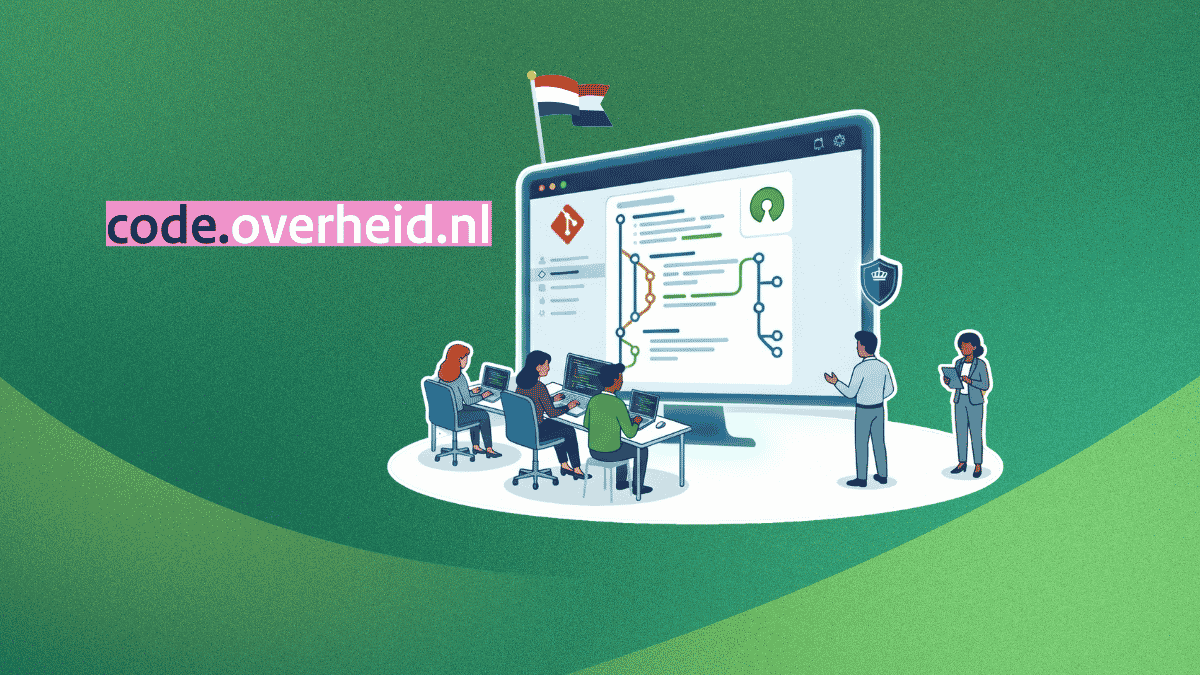
On April 24, 2026, code.overheid.nl went live in a soft launch. Tom Ootes, a developer advocate, announced it on the official developer portal. He didn't present it as a finished product. Instead, he called it a collective project—something to be built together with the developers who would use it. This humble, community-first approach is refreshing. The platform is a self-hosted Forgejo instance, running on Dutch government infrastructure managed by SSC-ICT (DAWO). It's free for all government organizations, from national ministries to local municipalities. The soft launch allowed early adopters to test the waters, file issues, and suggest improvements via pull requests on the platform itself. It's a living project, evolving in the open.

5. Goals of the Platform
The new platform, code.overheid.nl, is built around three core goals. First, open-source development with proper Git tooling—pull requests, issue tracking, code reviews—so government teams can collaborate efficiently. Second, government-wide collaboration to avoid duplicating work across agencies. When one ministry solves a problem, others can reuse that code. Third, sovereignty through full control over hosting. Because the platform runs on government servers, no third party can access or control the code. These goals aren't just technical; they're strategic. The platform aims to foster a culture of sharing and transparency within the Dutch public sector. By making it easy to discover and contribute to government projects, the Netherlands hopes to reduce costs and improve the quality of its digital services.
6. Pilot Phase and Gradual Rollout
This initiative is still in its pilot phase, and the rollout is deliberately gradual. Not every government organization can sign up yet. The idea is to grow the platform hand-in-hand with its users. Early participants are encouraged to file bugs and open pull requests—even on the platform's own configuration. This iterative approach helps the team behind code.overheid.nl learn what works and what needs tweaking before opening the doors to all agencies. It's a patient strategy that prioritizes stability and user feedback over speed. The government is essentially building a community of practice around the platform, ensuring that when it does go fully live, it will meet the real needs of developers across the country.
7. Who's Already on Board
Despite the pilot phase, several important organizations have already joined. The most notable is the Dutch Electoral Council (Kiesraad), which has uploaded election-related repositories—including Abacus, the software for vote counting and seat distribution, and e-KS, an electronic candidate nomination system. The Ministry of the Interior (BZK) has posted its DAWO project (a digital autonomous workplace initiative) and a DigiD source code release made public under a freedom of information ruling. Other ministries—Finance, Foreign Affairs, Agriculture, and Interior—have also signed up. Several major municipalities are on the platform too. This diverse mix shows broad support for the effort and suggests that the Netherlands' quiet GitHub replacement is gaining real traction.
The Netherlands' move to Forgejo is a bold step toward digital sovereignty. By building its own open-source code platform, the government is walking the talk on transparency and public ownership. It's a model that other nations might soon follow.