Reviving the BBC Computer Literacy Project: A Guide to Its History and Legacy
Overview
In the early 1980s, the United Kingdom faced a technological crossroads. The personal computer revolution was dawning, and the government feared that without intervention, the nation's youth would be left behind. The solution was the BBC Computer Literacy Project, a bold and visionary initiative that combined television programming, public broadcasting, and hardware development to equip a generation with digital skills. This guide explores the project's origins, its key components, and its enduring impact—from the iconic Acorn BBC Micro to the modern Raspberry Pi. Whether you lived through that era or are discovering it now, this tutorial will help you understand why the Computer Literacy Project remains a landmark in educational technology.
Prerequisites
Before diving into this guide, you should have:
- A general interest in 1980s computing history and home computers.
- Familiarity with basic concepts like CPUs, memory, and programming (helpful but not required).
- A willingness to explore how a national broadcaster shaped digital literacy.
Step-by-Step Instructions
1. Understand the Context: Britain in the Early 1980s
The personal computer market was fragmented. In the UK, systems like the Sinclair ZX80 and Commodore PET existed, but they were often expensive or lacked a unified educational vision. The British government recognised that to compete in the information age, children needed exposure to computers—not just as consumers but as creators. The BBC, as the country's public service broadcaster, was uniquely positioned to lead this charge.
2. The BBC's Role and the Launch of the Project
In 1980, the BBC launched the Computer Literacy Project with a dual mission: produce television programmes that taught computing concepts, and commission a computer that could be used in schools and homes. The series BBC Micro Live and Making the Most of the Micro became classroom staples. The project also published books, software, and training materials. The cornerstone was the decision to create a standard machine—one that would be affordable, durable, and capable of running the BBC's educational software.
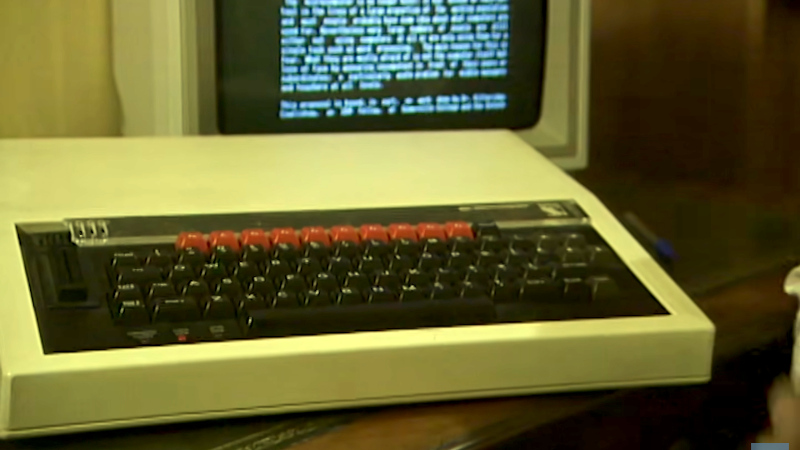
3. The Birth of the Acorn BBC Micro
Acorn Computers won the contract to build the machine. The result was the BBC Microcomputer System, known simply as the BBC Micro. Released in 1981, it boasted impressive specs for an 8-bit computer:
- MOS Technology 6502 CPU at 2 MHz
- 32 KB ROM (expandable) containing a sophisticated BASIC interpreter
- Up to 32 KB RAM
- High-resolution graphics modes (up to 640×256 pixels)
- Built-in sound, serial port, and networking capabilities
Notably, the BBC Micro used a 6502 second processor option that allowed it to run software for other CPUs. Its robust construction made it ideal for school environments. The machine's legacy extends far beyond education: the same processor architecture eventually led to the development of the ARM processor architecture, which powers most mobile devices today.
4. The Television Programmes: A National Classroom
The TV shows were the project's public face. Programmes like The Computer Programme (1982) and BBC Micro Live (1983–1987) introduced viewers to programming, word processing, and databases. They featured live demonstrations, studio guests, and even viewer call-ins. One memorable segment showed a BBC Micro controlling a robot arm. These broadcasts were not just tutorials—they were cultural events that demystified technology.
The 1992 retrospective that sparked this guide, Ten Years of the Computer Literacy Project, captured the optimism of the era. It featured interviews with Acorn engineers and educators, showing a world where computing was about possibility, not just office productivity.
5. Impact on Education: A Golden Age of Classroom Computing
Thousands of BBC Micros were installed in UK schools. Children learned to program in BASIC, control external devices, and understand how software worked. The government's Microelectronics Education Programme supported teacher training. By 1985, a survey found that over 80% of secondary schools had a computer—often a BBC Micro. This was a stark contrast to the later decline, when educational computing often meant learning Microsoft Word rather than programming.
6. Legacy: From ARM to the Raspberry Pi
The Computer Literacy Project's most profound legacy is the ARM processor. Acorn's engineers needed a more powerful CPU for future machines and developed the ARM (Acorn RISC Machine) architecture. Today, ARM chips are in billions of smartphones and tablets. The spirit of the project also resurfaced in 2012 with the Raspberry Pi, a low-cost computer designed to teach programming. The BBC itself later launched the micro:bit in 2016, a pocket-sized microcontroller for schools. Both are direct descendants of the original vision.
Common Mistakes and Misconceptions
When studying the BBC Computer Literacy Project, avoid these errors:
- Thinking it was just about hardware. The hardware was a tool, not the goal. The project's heart was the television programmes and the curriculum.
- Ignoring the TV programmes. Many people remember the BBC Micro but forget the broadcasts that taught millions how to use it.
- Assuming it was a commercial success. The BBC Micro was sold at cost, not for profit. The project was a public service investment.
- Believing the project ended in the 1990s. Its influence continued through ARM and later educational initiatives.
- Overlooking the role of community. User groups, magazines, and local computing clubs were essential to spreading knowledge.
Summary
The BBC Computer Literacy Project was a unique collaboration between a national broadcaster, a government, and a computer company. It produced not just the iconic BBC Micro but also a generation of programmers and engineers. The project's emphasis on active learning—making rather than consuming—was ahead of its time. Today, as we grapple with digital divides and the need for coding skills, the project offers timeless lessons. Its legacy lives on in the ARM architecture powering our devices and the affordable computers designed for classrooms. To understand where computing is going, we must remember where it came from.