10 Insights on the AI-Energy Nexus from US Energy Secretary and NVIDIA's Ian Buck
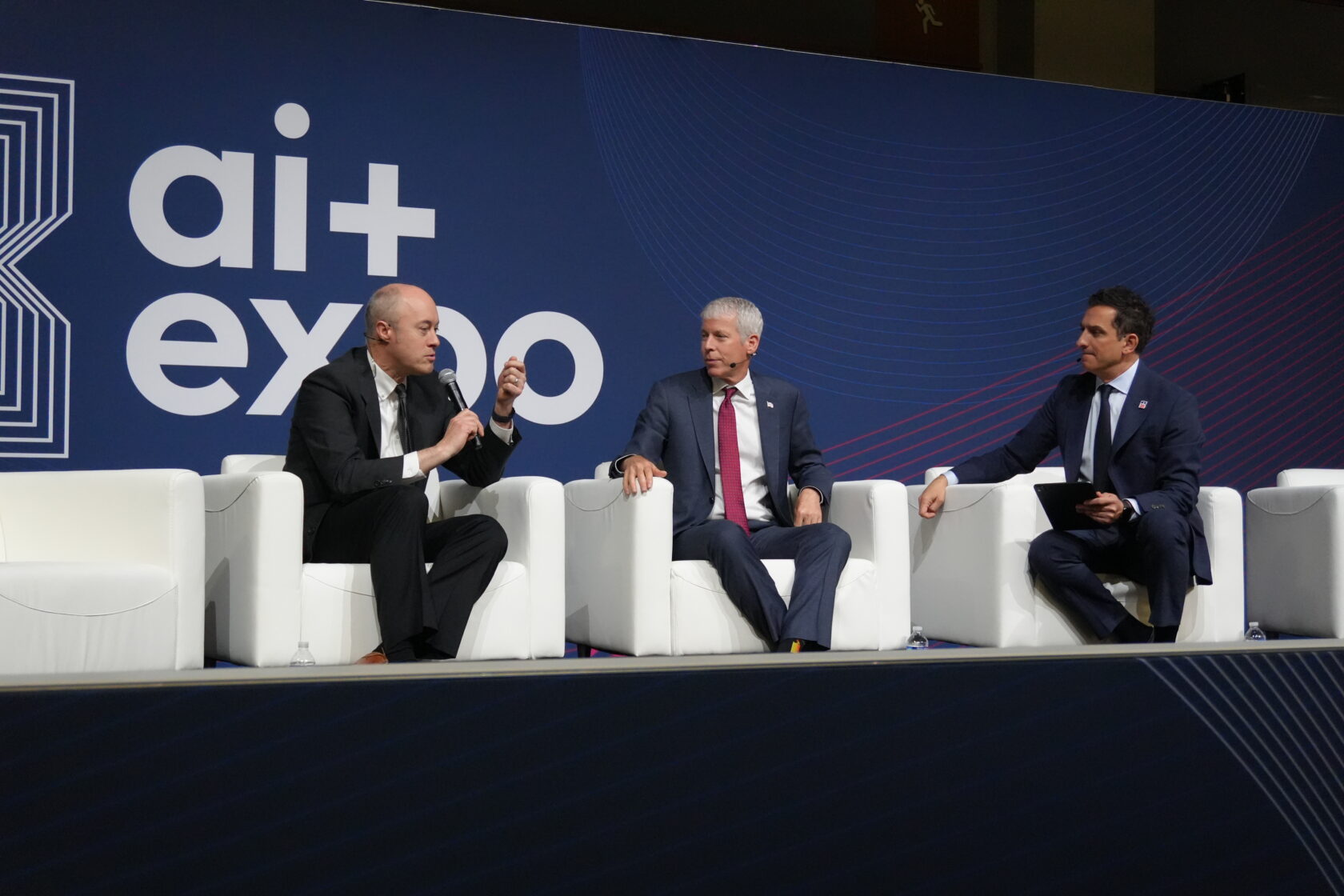
At the SCSP AI+ Expo, U.S. Energy Secretary Chris Wright and NVIDIA Vice President Ian Buck took the stage for a fireside chat titled “Powering the Next American Century.” Their conversation centered on a bold proposition: American leadership in artificial intelligence depends on American leadership in energy. AI isn't just a consumer of energy—it's a tool to generate and optimize the very power it needs. From the Department of Energy’s Genesis Mission to next-generation supercomputers, the discussion revealed a roadmap for how AI and energy can reinforce each other. Here are 10 key takeaways from that pivotal exchange.
1. The Core Argument: American AI Leadership Runs Through Energy
Wright and Buck made it clear that the U.S. cannot dominate AI without first dominating energy production. Every AI model requires massive computational power, which in turn demands abundant, affordable energy. Wright noted that societies with more energy have greater opportunities, framing energy as the bedrock of progress. Buck added that NVIDIA’s own growth mirrors this principle—their chips are designed for maximum efficiency, but the scale of AI workloads still requires a robust energy infrastructure. The message was simple: energy isn’t a side issue for AI; it’s the central enabler.
2. Energy Secretary’s Vision: “Energy is Life”
In a memorable line, Wright stated, “Energy is life. The more energy you have, the more affordable energy you have, the more opportunities you have in your society.” He argued that energy abundance underpins everything from economic growth to national security. For Wright, the energy-AI partnership isn’t just technical—it’s about improving human well-being. He emphasized that the DOE’s mission includes ensuring that energy remains cheap and plentiful, which will in turn fuel America’s AI ambitions.
3. The Genesis Mission: AI for Scientific Discovery
The Department of Energy’s Genesis Mission is a flagship effort to apply AI to scientific challenges, from materials science to climate modeling. Buck described NVIDIA’s deep involvement, saying, “NVIDIA is 100% committed and invested in Genesis.” The mission leverages AI to accelerate discoveries that were once thought impossible, such as predicting fusion energy reactions or designing new battery materials. By combining DOE’s national labs with NVIDIA’s computing stack, Genesis aims to turn scientific data into actionable breakthroughs.
4. NVIDIA’s Full-Stack Commitment to the DOE Partnership
Buck emphasized that NVIDIA brings more than just chips to the partnership. The company offers a full stack—algorithms, software frameworks, and two decades of experience collaborating with national labs. This includes customizing tools for scientific workloads and ensuring that researchers can easily tap into GPU-accelerated computing. The result is a platform where world-class hardware meets domain-specific software, enabling scientists to solve problems that were previously out of reach.
5. Building the World’s Most Powerful AI Supercomputers
At Argonne National Laboratory, NVIDIA and the DOE are constructing two cutting-edge AI supercomputers. The first, Equinox, is being deployed now with 10,000 NVIDIA Grace Blackwell GPUs—the same architecture used in leading AI training and inference systems. The second, Solstice, will feature 100,000 next-generation Vera Rubin GPUs. Buck explained that these machines are purpose-built for science, providing researchers with unprecedented computational capacity.
6. Solstice: A Supercomputer That Outpaces the TOP500 Combined
Solstice will deliver 5,000 exaflops of performance—a number so large that it’s five times greater than the combined power of all the systems on the TOP500 supercomputer list. This level of compute is dedicated exclusively to scientific discovery, from climate simulations to drug design. Buck noted that such power allows researchers to run models that simulate entire physical systems in real time, opening new frontiers in materials science and energy research.
7. Open-Source AI Models for Global Science
NVIDIA is developing an open-source AI model trained on 1.5 million physics papers, then fine-tuned on 100,000 specific publications. This model will be available to the global scientific community, enabling researchers everywhere to access state-of-the-art AI without licensing restrictions. Buck emphasized that this democratizes science: “We’re creating all the same technology, all the same hardware, for all of world science to go get access to.” The model can answer complex physics questions or suggest novel experiments.
8. Two Decades of Collaboration Between NVIDIA and National Labs
Buck pointed out that NVIDIA has been building supercomputers with the DOE’s national labs for over 20 years. This long history means the company understands the unique needs of scientific computing—like high-precision arithmetic and large-scale memory hierarchies. The partnership has evolved from early GPU accelerators to today’s massive clusters, with each generation tackling bigger challenges. Trust and institutional knowledge are key reasons why the Genesis Mission is off to a strong start.
9. Scaling AI Infrastructure for Energy Solutions
AI isn’t just a consumer of energy—it’s a tool to optimize energy production. Buck and Wright discussed how AI can help design more efficient solar cells, predict grid failures, and discover new catalysts for clean fuel. The supercomputers being built are not just for AI model training; they’ll also run simulations that cut years off energy research. Wright noted that AI-driven efficiency gains could reduce energy waste by double-digit percentages, a massive step toward sustainability.
10. The Broader Impact: AI+Expo Panels and Workforce Initiatives
The fireside chat was part of a larger SCSP event featuring many NVIDIA leaders. Cofounder Chris Malachowsky chaired the AI+ Careers Workforce Task Force, Rev Lebaredian spoke on physical AI, and Dion Harris covered AI for African infrastructure. These sessions underscored that the AI-energy nexus requires not just hardware but skilled people. Wright and Buck’s conversation set the tone: energy and AI are intertwined, and the U.S. must invest in both to lead the next century.
Conclusion: The SCSP AI+ Expo fireside chat between Chris Wright and Ian Buck painted a compelling picture of how AI and energy can reinforce each other. From the Genesis Mission to groundbreaking supercomputers like Solstice, the partnership between the DOE and NVIDIA is laying the foundation for American leadership. The takeaway is clear: energy is the fuel for AI, and AI is the accelerator for energy innovation. As these technologies converge, the “Powering the Next American Century” vision may become a reality sooner than we think.