How Tectonic Forces Sculpted Australia's Twelve Apostles: A Journey Through Millions of Years
Introduction: The Hidden Origins of an Iconic Coastline
Rising dramatically from the churning waters of Victoria's coastline, the Twelve Apostles have long captivated visitors with their majestic limestone pillars. For decades, the prevailing explanation for their formation was simple erosion—the relentless pounding of waves carving away softer rock to leave these towering stacks. But groundbreaking research has unveiled a far more complex and awe-inspiring story: these natural wonders were not merely eroded into existence but were slowly pushed upward from the ocean floor, driven by powerful tectonic forces over millions of years. This revelation transforms our understanding of the Apostles from passive victims of weathering to active participants in Earth's geological drama.
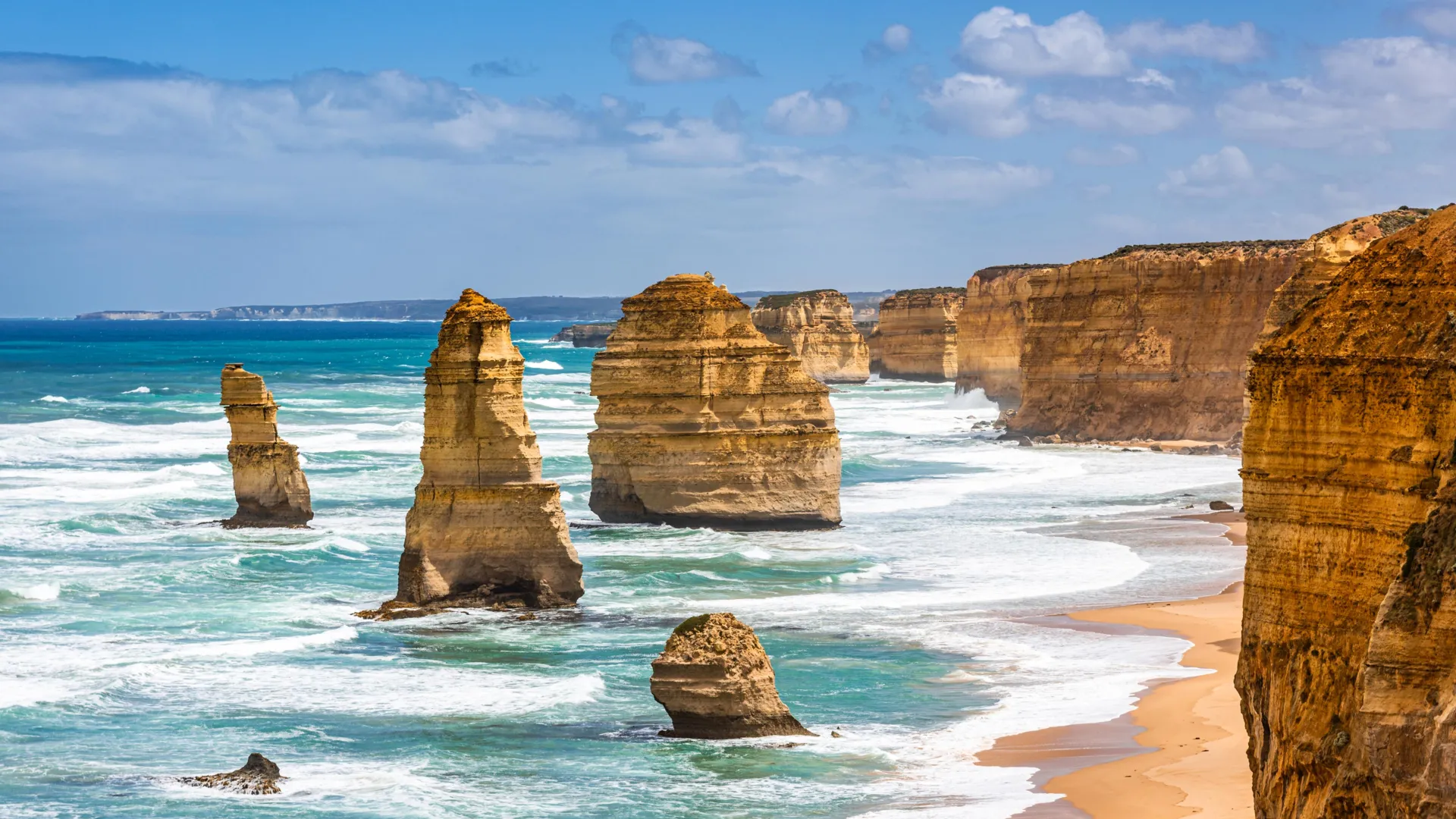
The Geological Birth of the Twelve Apostles
The Twelve Apostles are part of the Port Campbell National Park, situated along the Great Ocean Road. They consist of limestone stacks, each standing up to 50 meters tall, formed from ancient marine sediments. The new study, conducted by geoscientists from the University of Melbourne, reveals that the Apostles' creation involved two distinct phases: tectonic uplift and subsequent erosion.
Role of Tectonic Forces
About 15 to 20 million years ago, the Australian tectonic plate began moving northward, colliding with the Pacific plate. This collision generated immense pressure, causing the seafloor along the southern coast to slowly rise. Over millions of years, layers of limestone—originally deposited in a shallow seabed—were lifted above the water line. This uplift created a new coastal platform, exposing the limestone to the elements. Without this tectonic push, the limestone might have remained buried beneath the ocean, never forming the iconic stacks we see today.
The research team used advanced geological dating techniques and seismic imaging to trace the uplift history. They found that the rate of uplift was not constant; rather, it accelerated in pulses, each pulse corresponding to periods of intense tectonic activity. These pulses allowed the limestone to rise in a way that preserved its internal structure, creating the vertical columns that later eroded into stacks.
Erosion: The Sculptor's Chisel
Once the limestone was exposed, erosion took over as the primary sculpting force. Wave action, wind, and rain gradually carved into the soft rock, creating caves, arches, and eventually isolated stacks. The famous Twelve Apostles represent the final stage of this erosion process, where only the most resistant portions of the limestone remain standing. Interestingly, the name "Twelve Apostles" is a misnomer; only nine stacks currently exist at the site, as others have collapsed due to relentless erosion.
A Natural Time Capsule: Clues from the Past
Beyond their aesthetic beauty, the Twelve Apostles serve as a remarkable natural archive. The limestone that forms them contains traces of ancient life, preserved as fossils, and chemical signatures that reveal past climates and sea levels. The study highlights that these stacks provide a continuous record spanning up to 14 million years, making them invaluable to scientists studying Earth's history.
Clues to Ancient Climates
By analyzing the oxygen and carbon isotopes within the limestone, researchers can reconstruct temperature and precipitation patterns of ancient epochs. For instance, during the Miocene period (around 14 million years ago), the region experienced a warmer climate with higher sea levels. The limestone deposited then contains higher ratios of lighter isotopes, indicating warmer water temperatures. These data help refine climate models and our understanding of how coastal environments respond to global temperature changes.
Sea Level Changes Over Millennia
The vertical layers of the Apostles also record fluctuations in sea level over millions of years. Each layer corresponds to a different depth of water during its deposition. By examining the sequence of layers, scientists can map out periods of transgression (sea level rise) and regression (sea level fall). This information is crucial for predicting future sea level changes in a warming world. The Apostles act like giant tide gauges, preserving a history of ocean dynamics that predates human records by thousands of millennia.
Ongoing Erosion and Preservation Challenges
While tectonic forces built the Apostles, erosion continues to dismantle them. The rate of erosion has accelerated in recent decades due to storm surges and rising sea levels linked to climate change. In 1990, a significant collapse saw a 45-meter stack fall into the sea. Today, only nine of the original 12 (or more) stacks remain visible. Conservation efforts focus on maintaining the natural processes while ensuring safe public access. The Great Ocean Road Authority monitors the site closely, and tourists are encouraged to view the Apostles from designated platforms to minimize human impact.
Conclusion: A Dynamic Landscape Created by Deep Time
The Twelve Apostles are far more than picturesque rock formations; they are testaments to the immense forces that shape our planet. The revelation that they were pushed up from the ocean floor by tectonic forces, rather than simply eroded, adds a new layer of wonder to their story. As natural time capsules, they offer scientists a window into prehistoric climates and sea levels, helping us better understand our present and future. Standing at the edge of the Great Ocean Road, watching the waves crash against these limestone giants, one can now appreciate the millions of years of tectonic struggle and erosion that culminated in this breathtaking scene.