Why Toyota's Hydrogen Truck Gambit Highlights The Impossible Market Puzzle
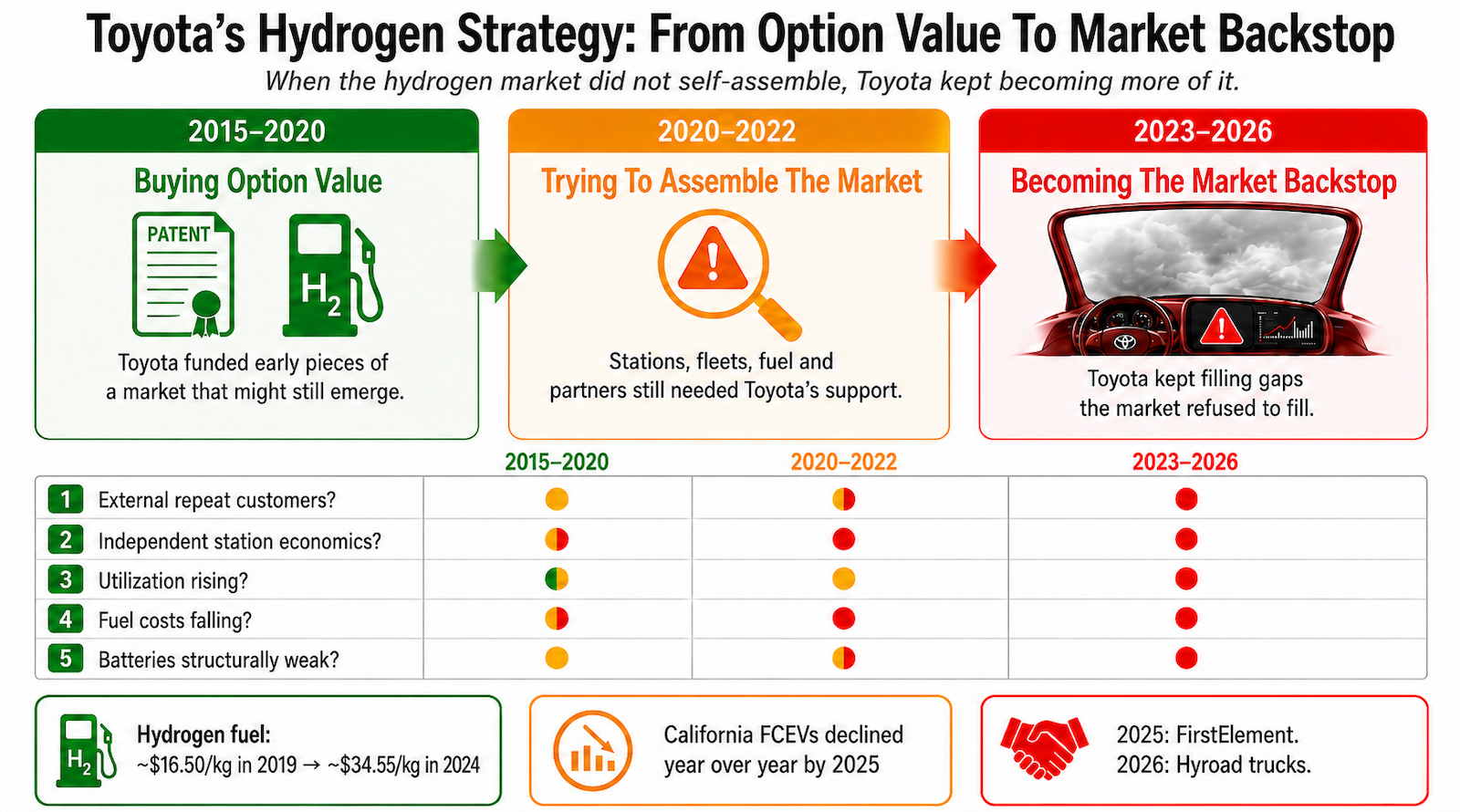
When Toyota announced a deal to put 40 hydrogen-powered trucks on the road through Hyroad—a startup staffed largely by former Nikola executives—it might have seemed like a small step. But this move is far more significant than the modest fleet size suggests. It represents yet another attempt by Toyota to force a hydrogen market into existence, a market that has stubbornly refused to form despite decades of effort. Here are ten things you need to understand about this ongoing saga.
1. The 40-Truck Order Is a Symbol, Not a Scale Play
At first glance, 40 trucks is a rounding error in the global transport fleet. But the number matters because it signals that Toyota is willing to back niche players with real hardware. Hyroad is not a giant OEM; it’s a scrappy startup that acquired Nikola’s leftover hydrogen truck assets. By supplying fuel cells for these 40 trucks, Toyota is placing a bet that even small deployments can kickstart supply chains. The real story is not the quantity but the willingness to keep investing in a technology that has so far generated minimal commercial traction.
2. Hyroad Is Built From Nikola’s Ashes
Hyroad was formed largely by ex-Nikola executives after Nikola’s spectacular collapse over fraud allegations. These are people who saw firsthand how hype can outrun reality in hydrogen transport. Yet they’re back, this time with a more modest plan: acquiring Nikola’s actual assets (trucks, patents, perhaps some infrastructure) and partnering with Toyota. This resurrection suggests that some in the industry still believe hydrogen has a shot if the business model is less about vaporware and more about incremental, honest deployment.
3. Toyota’s Hydrogen Bet Has Been a Lonely Road
While most automakers have pivoted hard toward battery-electric vehicles, Toyota has stubbornly promoted hydrogen fuel cells as a vital part of the zero-emission future. The company has invested billions in fuel cell stacks, hydrogen production partnerships, and even a dedicated Mirai sedan. Yet sales of the Mirai have been dismal, and hydrogen refueling infrastructure remains sparse. Toyota’s persistence is partly ideological—its leadership believes hydrogen is essential for heavy-duty and long-range applications—but it also risks being stranded if battery technology continues its rapid improvement.
4. Infrastructure Remains the Immovable Object
Hydrogen refueling stations are expensive to build—often $1–2 million each—and require a steady supply of green hydrogen, which itself is costly and energy-intensive to produce. California has spent years trying to build a network, with limited success. For trucks, the problem is even worse: depots need high-capacity dispensers capable of filling multiple big rigs quickly. Without a dense network, no operator will buy hydrogen trucks, and without trucks, no one will build stations. Toyota’s latest move tries to break this cycle by placing a small fleet in a captive depot scenario, but scaling that model remains daunting.
5. The Cost Gap With Battery-Electric Trucks Is Shrinking—for Now
Battery-electric trucks from Tesla, Volvo, and others are already on the road, and their total cost of ownership is dropping fast as battery prices fall. Hydrogen fuel cell trucks currently cost about 2–3 times more per mile to operate, depending on hydrogen prices. While advocates argue that hydrogen will be cheaper for very long routes or cold climates, the window for hydrogen to carve out a niche is narrowing. Toyota’s strategy seems to rely on future improvements in hydrogen production and fuel cell durability to close the gap, but investors are increasingly impatient.
6. Nikola’s Failure Haunts Every New Hydrogen Venture
Nikola’s fraud—claiming a working truck that was actually just a body rolling downhill—poisoned the well for legitimate hydrogen transport companies. Any new startup, including Hyroad, now faces intense skepticism from investors, customers, and regulators. Toyota’s association with Hyroad could backfire if the startup stumbles, but it also provides a credibility boost. Still, the stigma is real: many fleet operators now associate hydrogen with broken promises and vaporware, making it harder to secure pilot contracts.
7. The Green Hydrogen Supply Chain Is Still Embryonic
For hydrogen to be truly zero-emission, it must be produced from renewable energy (green hydrogen). Currently, most hydrogen is made from natural gas via steam methane reforming, emitting significant CO2. Green hydrogen projects are growing but remain tiny compared to global demand. Toyota’s trucks will likely run on blue or gray hydrogen initially, undermining their environmental credentials. Until green hydrogen becomes abundant and cheap, the entire hydrogen transport concept rests on shaky ecological ground.
8. Heavy-Duty Applications Are Hydrogen’s Best—and Only—Hope
Battery-electric technology dominates passenger cars and light trucks, but for heavy-duty applications like long-haul trucking, marine, or aviation, hydrogen still has theoretical advantages: higher energy density and faster refueling. Toyota is betting that these use cases will eventually justify a separate infrastructure. The 40-truck order is a toehold in exactly that segment. If hydrogen can prove itself in drayage or regional haul, it might survive as a niche technology until a broader infrastructure emerges.
9. Policy Support Is Inconsistent and Unreliable
In the U.S., the Inflation Reduction Act offers generous tax credits for green hydrogen production, and the Department of Energy is funding regional hydrogen hubs. But these policies face political headwinds; a change in administration could delay or defund them. In Europe, hydrogen targets have been scaled back amid cost concerns. Toyota needs consistent, long-term policy to justify its investments, but the political landscape is anything but stable. The 40-truck deal may be as much a lobbying tool as a commercial venture.
10. The Market Will Decide—but Only After a Long, Expensive Wait
Ultimately, the hydrogen market will form only if the technology becomes economically viable without subsidies. Toyota’s persistence is admirable but risky. Each small deployment like the Hyroad deal adds data, experience, and incremental infrastructure. Yet the clock is ticking: battery-electric trucks improve every year, and hydrogen might never catch up. For now, Toyota keeps assembling a puzzle that refuses to form, hoping that one day the pieces will finally fit.
In conclusion, Toyota's latest hydrogen truck move is not about the 40 trucks themselves. It is about the belief that a market can be built if you keep showing up with fuel cells and partnerships. Whether that faith is justified will be decided not by hype, but by hard economics and infrastructure realities. Until then, the world watches a determined automaker try to turn hydrogen from a visionary’s dream into a commercial reality.