Exploring Earth's Ring Current: A Comprehensive Guide to the STORIE Mission
Overview
Our planet's magnetic field acts as a giant, invisible net, capturing electrically charged particles from space and holding them in a doughnut-shaped region called the ring current. This dynamic swarm of ions and electrons plays a crucial role in how Earth responds to space weather—the ever-changing conditions in space driven by solar activity. Though scientists have studied the ring current for decades, many mysteries remain: How does it grow and shrink during solar storms? What exactly are its particle sources? To answer these questions, NASA is launching the STORIE (Storm Time O+ Ring current Imaging Evolution) mission. Scheduled to launch in May aboard the 34th SpaceX commercial resupply mission to the International Space Station, STORIE will be installed on the station's exterior, providing an unprecedented inside-out view of the ring current. This guide walks you through the key concepts, the mission's approach, and how you can understand its findings—no advanced degree required.
Prerequisites
Before diving into the details, ensure you're comfortable with these foundational topics:
- Basic electromagnetism: Understanding that charged particles move in magnetic fields, creating currents.
- Solar wind and solar storms: The stream of plasma from the Sun that interacts with Earth's magnetosphere.
- Satellite orbits and the International Space Station: How vantage point affects observations.
- Familiarity with data analysis (optional): Although not required, basic Python skills will help if you want to experiment with sample datasets.
No prior space physics expertise is needed—we'll explain every term as we go.
Step-by-Step Instructions
Step 1: Grasping the Ring Current's Structure and Behavior
The ring current is an invisible, doughnut-shaped belt of low-energy charged particles (mainly protons and oxygen ions) trapped by Earth's magnetic field. Unlike the more energetic Van Allen radiation belts, the ring current's particles have lower energies (keV range vs. MeV range) and are highly responsive to solar storms. During a storm, the ring current can strengthen dramatically, expand in size, and shift its composition. This, in turn, induces magnetic fluctuations on the ground, potentially disrupting power grids and pipelines, and causing surface charging on satellites. To visualize it, imagine a flexible hula hoop that inflates when the Sun blows a gust of solar wind. STORIE aims to capture these changes in real time from a privileged perch on the ISS.
Step 2: The STORIE Instrument and Its Unique Perspective
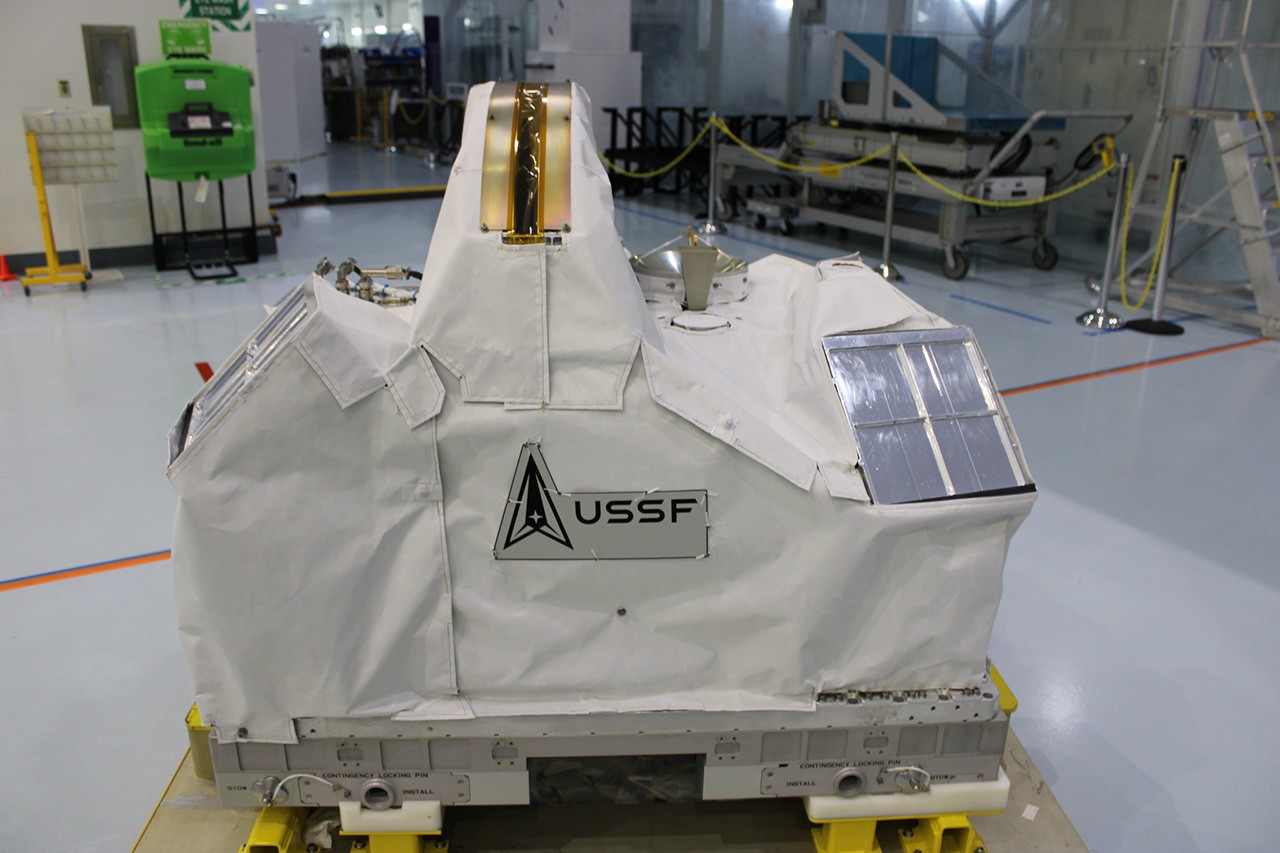
STORIE is an imaging instrument designed to observe the ring current in a new way. Most previous missions have measured particles in situ—directly sampling the region as they flew through it. STORIE, however, uses energetic neutral atom (ENA) imaging. Here's the trick: When ring current ions collide with neutral gas in Earth's exosphere, they capture an electron and become neutral atoms, flying outward in straight lines without being bent by the magnetic field. STORIE detects these neutral atoms, allowing it to create a global picture of the ring current's density and composition. Mounted on the ISS exterior (facing outward), it provides a stable platform with a wide field of view. The instrument is part of the Space Test Program – Houston 11 (STP-H11) payload, a partnership between the U.S. Space Force and NASA.
Step 3: Observing the Ring Current from the ISS
Once delivered to the ISS, STORIE will be robotically installed on the station's truss (expected a few days after arrival). From its low Earth orbit (about 400 km altitude), it will look outward, away from Earth, toward the ring current region centered around 3–5 Earth radii. The ISS's orbit precesses slowly, allowing STORIE to scan different longitudes over time. The mission team will command observations during geomagnetic storms and quiet periods to compare. Data will be downlinked to Earth and processed into images showing the distribution of oxygen ions (O+)—a key species that indicates the influence of Earth's ionosphere as a source. Jump back to Step 2 for context.
Step 4: Analyzing the Data – What Scientists Will Look For
With the ENA images, researchers will extract information such as:
- The total energy content of the ring current.
- The relative abundance of O+ vs. protons.
- The location and intensity of the current as a function of storm phase.
To give you a taste, here's a simplified Python code snippet that simulates processing a STORIE-like image (using a mock dataset):
import numpy as np
import matplotlib.pyplot as plt

# Mock ENA counts (64x64 grid)
image = np.random.poisson(lam=10, size=(64, 64))
plt.imshow(image, cmap='hot', origin='lower')
plt.colorbar(label='ENA counts')
plt.title('Simulated STORIE ENA Image')
plt.xlabel('Pixel X')
plt.ylabel('Pixel Y')
plt.show()
Of course, real analysis involves calibration, background subtraction, and inversion algorithms to convert counts into physical parameters. But the goal is clear: by tracking O+ variations, scientists hope to unravel how much of the ring current originates from Earth's ionosphere during storms.
Common Mistakes and Pitfalls
Confusing Ring Current with Van Allen Belts
A frequent error is treating the ring current and the Van Allen belts as the same region. While they overlap geographically, they differ in energy, particle composition, and dynamics. The ring current consists of lower-energy particles (1–200 keV) that carry a significant net current, whereas the Van Allen belts contain higher-energy particles (up to several MeV) and exhibit more stable trapping. During storms, the ring current intensifies and can even inject particles into the inner belt, but they remain distinct populations.
Underestimating Space Weather Impacts
Another mistake is dismissing the ring current's effects as purely academic. Changes in the ring current generate magnetic perturbations on the ground, measurable as the Dst index. These perturbations can induce currents in long conductors like pipelines and power lines, causing corrosion or blackouts. Moreover, surface charging on spacecraft can lead to electrostatic discharges that damage electronics. STORIE's data will help forecast such hazards.
Summary
The STORIE mission represents a leap forward in our ability to monitor Earth's ring current—a poorly understood but critical element of space weather. By using ENA imaging from the ISS, it will provide global snapshots of particle composition and dynamics, especially oxygen ions from our own atmosphere. This guide walked you through the basics of the ring current, STORIE's unique approach, the observation strategy, and a glimpse into data analysis. Whether you're a student, educator, or space enthusiast, understanding STORIE brings you closer to appreciating the invisible forces that shape our technological world.