Uncovering Science's Hidden Gems: A Roundup of Fascinating April Discoveries
Every month, the scientific community produces a wealth of intriguing studies that often slip under the radar. This April, we shine a spotlight on four captivating stories that nearly went unnoticed: the ancient evidence of Roman ship repairs, the surprising ability of mushrooms to detect human urine, the physics behind crushing soda cans, and the fluid dynamics that allow dolphins to swim with extraordinary speed. Here, we delve into the details that make these discoveries so remarkable.
The Aerodynamics of Dolphin Speed: Supercomputer Simulations Reveal Vortex Secrets
Dolphins are renowned for their graceful and swift movements in water, yet the precise mechanics behind their propulsion have long puzzled scientists. A team from the University of Osaka in Japan turned to advanced supercomputer simulations to uncover how these marine mammals achieve such efficiency. Their findings, published in the journal Physical Review Fluids, focus on the role of vortices—swirling currents of water—generated by dolphin kicks.
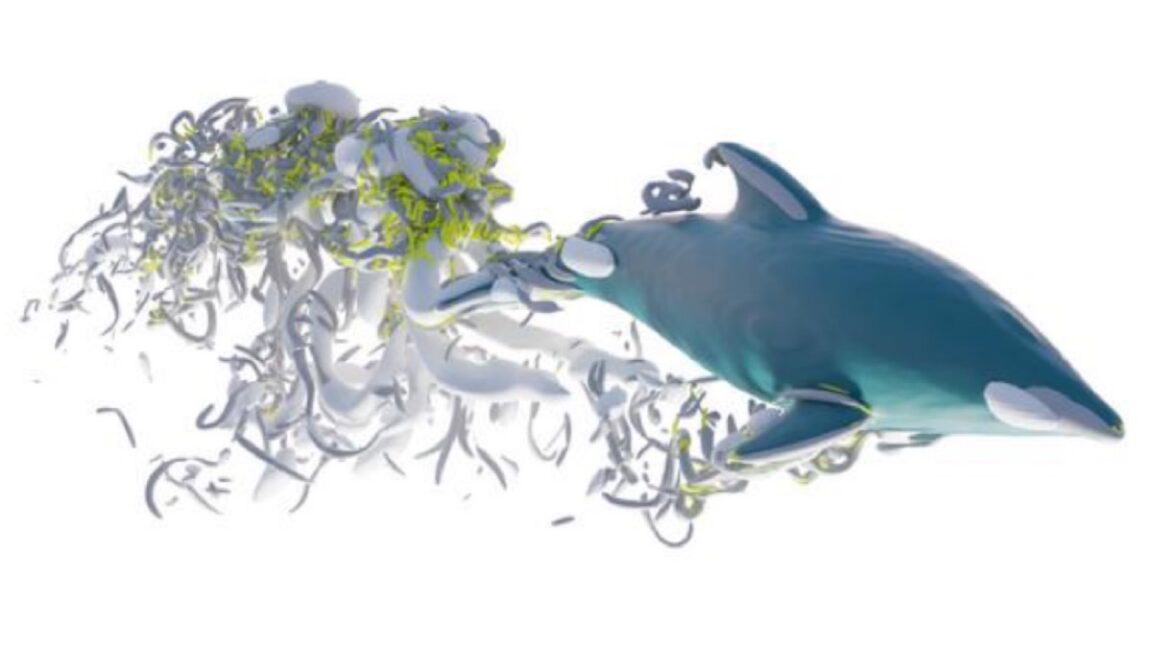
The Mystery of Dolphin Propulsion
When a dolphin flaps its tail up and down, it pushes water backward, creating eddies of various sizes. These vortices are key to understanding thrust. The Japanese researchers used high-resolution simulations to break down the vortex dynamics. They discovered that the initial tail oscillations produce large, toroidal vortex rings that serve as the primary source of forward thrust. As these large rings travel, they break apart into numerous smaller vortices. However, the smaller eddies do not contribute to propulsion—they merely dissipate energy without aiding motion.
Vortex Ring Generation and Thrust Efficiency
The study reveals a fascinating balance: dolphins generate powerful vortex rings that efficiently convert muscle energy into forward momentum. The large rings act like temporary 'jets' that propel the animal forward. The subsequent fragmentation into smaller vortices represents an energy loss, but overall the dolphin's swimming mechanism remains remarkably optimized. This insight could inspire more efficient underwater vehicle designs, mimicking dolphins' ability to create and manage vortex structures.
Implications for Engineering and Biology
Understanding dolphin locomotion goes beyond curiosity. Engineers studying marine propulsion may replicate vortex ring generation to improve submarines or autonomous underwater vehicles. Biologists, meanwhile, gain a clearer picture of how dolphins have evolved to thrive in aquatic environments. The supercomputer simulations also open doors for studying other fast-swimming marine creatures, such as tuna or whales, using similar techniques.
Other Missed Stories: A Glimpse into April's Scientific Curiosities
- Roman Ship Repairs: Archaeologists have uncovered evidence of ancient ship repairs, showing the sophisticated techniques Roman sailors used to maintain their vessels—a testament to maritime engineering of the era.
- Mushrooms and Human Urine: Researchers discovered that certain fungi can detect human urine, a finding with potential applications in environmental monitoring and medical diagnostics.
- Crushing Soda Cans for Science: A study explored the physics of crushing soda cans, analyzing the forces and failure mechanisms—insights that could support material science and packaging design.
These stories, though diverse, share a common thread: they remind us that science is full of surprising revelations, often hiding in plain sight. For more in-depth reading on dolphin hydrodynamics, check out the original paper in Physical Review Fluids.